
 +1 408-915-6865
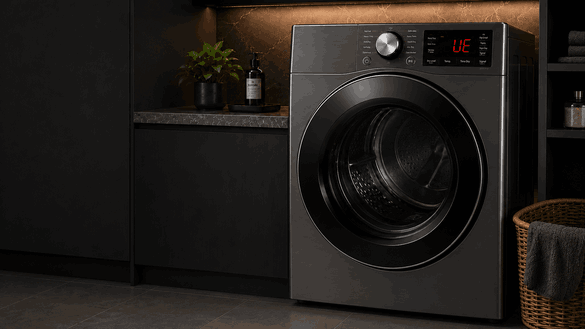
Fisher and Paykel Dryer Not Heating
A Fisher and Paykel dryer not heating can leave clothes damp even after a full cycle. The drum may turn, the display may work, and the dryer may sound normal, but the laundry stays cool or only slightly warm. In some cases, the dryer may run longer than usual, stop early, or show signs of poor airflow along with weak heat.
For homeowners and small businesses in Campbell, San Jose, and nearby Bay Area communities, a dryer that will not heat can quickly slow down laundry routines. Hotline Appliance Repair helps diagnose Fisher and Paykel dryer problems involving heating elements, thermostats, sensors, airflow restrictions, control response, motor-related signals, and power or gas-supply conditions depending on the model.
Why a Dryer Can Run Without Producing Heat
A dryer needs both drum movement and controlled heat to dry clothes properly. If the drum spins but the air stays cool, the machine may be losing heat production, heat regulation, or airflow performance.
A Fisher and Paykel dryer not heating does not always mean one part has failed. The problem may involve a heating element, gas ignition system, thermal fuse, thermostat, moisture sensor, control board, blocked vent path, or incoming power issue.
The way the dryer behaves during the cycle often helps narrow the source of the problem.
Heating Problems You May Notice
Dryer Runs but Clothes Stay Damp
If the dryer completes a cycle but laundry remains wet, the appliance may not be producing enough heat or may not be moving warm air through the drum correctly.
Dryer Feels Warm but Does Not Dry
Weak heat can be just as frustrating as no heat. This may point to restricted airflow, sensor misreading, vent blockage, thermostat issues, or heating performance that is no longer stable.
Dryer Stops Before Clothes Are Dry
If the dryer shuts off early, the appliance may be reacting to temperature limits, airflow trouble, moisture-sensor feedback, or control response problems.
No Heat After a Power Event
If the issue started after a breaker trip, outage, or electrical event, the dryer may have a power-supply or control-related problem. Some dryers can still run while the heating circuit does not operate correctly.
Possible Causes of Fisher and Paykel Dryer No-Heat Issues
A failed heating element can prevent an electric dryer from producing warm air. On gas models, ignition components, gas valve behavior, or flame-sensing parts may affect heat production.
Airflow restrictions can also cause drying problems. A clogged lint area, restricted exhaust path, or blocked vent may reduce heat movement and make clothes stay damp. Poor airflow can also cause safety controls to interrupt heating.
Thermostats, thermal fuses, temperature sensors, or moisture sensors may affect how the dryer heats and when it stops. If a sensor sends incorrect information, the dryer may underheat, stop early, or fail to regulate temperature.
Other possible causes include wiring faults, relay problems, motor switch issues, control-board failure, or incoming power problems. Because dryers use high heat and electrical or gas-related systems, guessing at parts is not a safe approach.
Safe Observations Before Service
You can make a few safe observations before calling for repair.
Notice whether the dryer has no heat at all or only weak heat. Check whether clothes are still wet, slightly damp, or warm but not dry. Pay attention to whether the dryer runs for the full cycle, stops early, or shows an error code.
You can also note whether the issue happens with every load or mainly with heavy towels, bedding, or large laundry loads. If the dryer has a lint warning, airflow message, blinking display, or unusual sound, write it down before resetting the appliance.
Do not remove panels, test wiring, open gas components, bypass safety parts, disconnect internal ducts, or keep running repeated cycles if the dryer smells hot, overheats, or behaves unusually.
When to Stop Using the Dryer
Stop using the dryer if you notice a burning smell, overheating, smoke, repeated shutoffs, electrical behavior, or loud unusual noises. These signs can indicate that the dryer is not operating safely.
If you have a gas dryer and notice a strong gas smell that does not fade, stop using the appliance, ventilate the area if it is safe to do so, and contact the proper gas emergency service before appliance repair.
You should also avoid continued use if clothes remain damp after repeated cycles, the dryer runs much longer than normal, or the appliance shows airflow or heat-related warnings.
How Hotline Appliance Repair Diagnoses Dryer Heating Problems
Hotline Appliance Repair checks the dryer as a complete heat-and-airflow system. A technician may inspect heat production, airflow behavior, lint and vent-related symptoms, temperature sensor response, thermostat function, safety devices, control signals, and power or gas-related conditions depending on the dryer type.
For Fisher and Paykel dryer repair in Campbell, San Jose, and the Bay Area, this diagnostic approach helps identify whether the no-heat problem comes from a heating component, airflow restriction, sensor fault, safety cutoff, control issue, or supply-related condition.
Service Area
Hotline Appliance Repair serves Campbell, San Jose, and the Bay Area, including Santa Clara, Sunnyvale, Cupertino, Mountain View, Palo Alto, Fremont, Milpitas, San Mateo, and nearby communities.
FAQ
Why is my Fisher and Paykel dryer not heating?
A Fisher and Paykel dryer may not heat because of a failed heating element, ignition issue on gas models, thermostat fault, thermal fuse problem, airflow restriction, sensor issue, control-board fault, or power-supply problem.
Why does my dryer run but clothes stay wet?
The dryer may be tumbling without enough heat, or warm air may not be moving properly through the drum because of an airflow or vent-related issue.
Can a blocked vent cause no heat?
Yes. Restricted airflow can reduce drying performance and may trigger safety controls that interrupt heating.
Is it safe to keep using a dryer with no heat?
It is better not to keep running repeated cycles when the dryer is not heating correctly, especially if there is overheating, burning smell, airflow warning, or unusual electrical behavior.
When should I call for dryer service?
Service is recommended when the dryer repeatedly does not heat, clothes remain damp, the dryer stops early, shows error behavior, smells hot, or takes much longer than normal to dry.
Contact Information
Hotline Appliance Repair – San Jose
📍 Address: 665 Nido, Campbell, CA 95008
📧 Email: hotlineappliancerepair@gmail.com
📞 Phone: +1 408-915-6865
🕒 Open Hours: Monday – Sunday: 8:00 AM – 8:00 PM
